
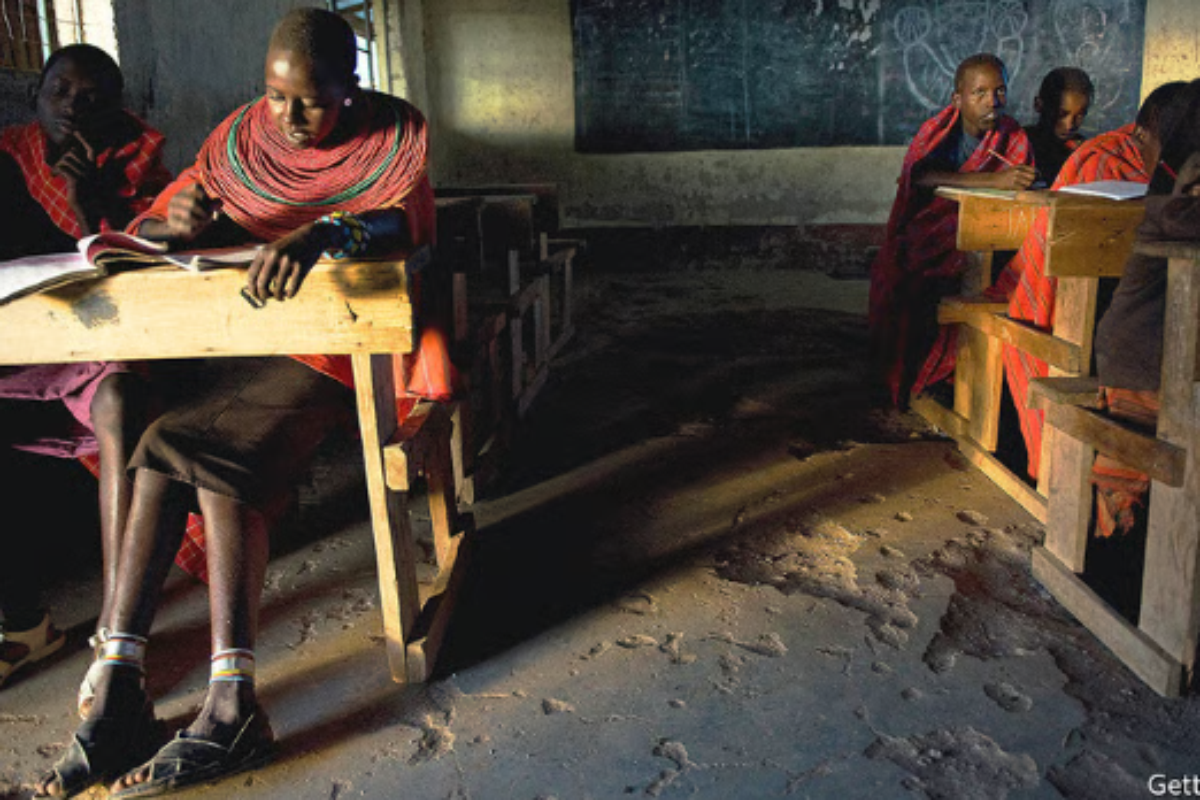
At dawn in northern Kenya's arid north, a classroom sits locked. It's not a holiday. The students have left with their families, chasing water and pasture after another failed rainy season. The chalkboard holds unfinished arithmetic. The register lies untouched. Education was not officially disrupted. It simply vanished.
Across Africa, climate change now shapes who attends school, who drops out, and who never returns. Artificial intelligence promises solutions through adaptive learning and remote tools, but digital divides turn it into a risk amplifier. Climate disruption meets uneven infrastructure, making learning a privilege in the places that need it most.
This edition faces a core truth: climate impacts are already eroding education, and AI deployment could widen those gaps unless designed with justice in mind.
Climate Shocks Reshape Schooling
Floods in South Sudan close schools for months, as seen in the 2023 crises that displaced 700,000 learners (UNICEF). Cyclones in Mozambique, like Idai in 2019, destroy infrastructure faster than rebuilding efforts. Heatwaves in the Sahel force schedule shifts, while droughts in Kenya's ASAL counties pull children, especially girls, into caregiving or labor.
UNESCO's 2023 Global Education Monitoring Report estimates climate disasters caused 216 million lost school hours in sub-Saharan Africa from 2000-2019, with annual figures now exceeding 10 million due to rising frequency. These losses rarely appear in national stats, compounding over time. Systems built for stability face chaos at scale.
AI Steps In, with Promise and Peril
Governments and partners are piloting AI tools continent-wide. Rwanda's Digital Transformation Strategy integrates AI-adaptive platforms like those from Eneza Education to sustain learning during disruptions. Kenya's M-Shule uses basic AI for personalized STEM lessons, including climate modules. South Africa's DBE trials predictive analytics to spot at-risk dropouts amid socioeconomic pressures.
These tools can personalize for displaced students, ease teacher burdens, and enable remote access. Early wins exist: in Uganda's refugee camps, UNICEF's AI chatbots boosted literacy by 15% in 2024 pilots (EdTech Hub). Intentions are solid. Execution hinges on context.
The Infrastructure Gap
AI requires reliable power, internet, devices, and data—scarce where climate hits hardest. Floods ruin hardware. Power outages, up 30% in parts of East Africa per World Bank 2025 data, kill platforms. Spotty connectivity makes remote learning illusory for 70% of rural sub-Saharan schools (ITU 2024).
Algorithmic assessments, when used, draw from biased datasets. Models often undervalue nomadic or informal communities, labeling them "high risk" based on incomplete records. This is not malice but a symptom of whose lives get digitized.
Beyond Data Poverty
Communities branded "data-poor" by AI are often under-measured, not deficient. Rural Kenya generates fragmented records; Sahel nomads evade formal tracking. AI treats gaps as noise, overlooking intelligence and resilience. Students in highest-risk zones fade from view.
Toward Education Justice
Climate justice must prioritize education. It builds adaptation skills, innovation, and accountability. Africa's workforce depends on resilient learning.
Five Shifts for Ethical AI in Climate-Stressed Education
The Path Forward
AI will shape Africa's education amid inevitable climate pressures. The choice is whose realities it serves. If classrooms crumble unaddressed, no tech can rebuild what is lost. Justice demands we act now.