
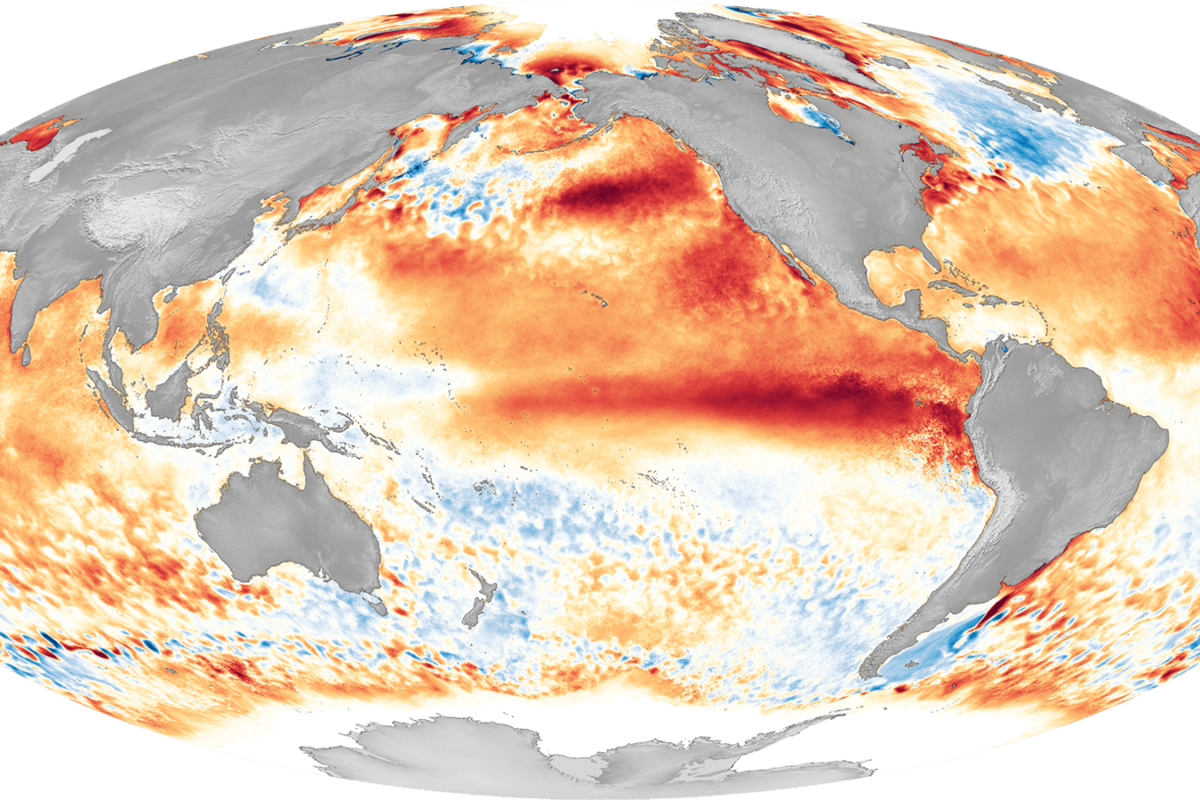
Testing GreenScope Analytics: Operationalizing Global Climate Drivers for Africa’s ASALs
Climate risk in Africa is rarely local in origin.
Droughts, floods, and vegetation stress in Kenya’s Arid and Semi-Arid Lands (ASALs) are often triggered by large-scale ocean–atmosphere processes that unfold thousands of kilometers away before cascading into local impacts.
At GreenScope Analytics, we are currently running a test implementation of our platform to validate whether these global climate drivers can be ingested, aligned, and translated into decision-ready climate intelligence for ASAL regions.
This is not a standalone research exercise.
It is a systems-level test of how the GreenScope platform behaves under real climate complexity.
---
Objective of the Test Project
The objective of this test project is to assess whether the GreenScope Analytics platform can:
In practice, this means answering a core question:
Can GreenScope reliably connect global climate variability to regional hydrology and local ecosystem response in Kenya’s ASALs — in a way that supports real-world planning and resilience decisions?
To answer this, we start with the global drivers of variability.
---
Why Global Climate Drivers Matter
Many early warning systems fail not because of missing local data, but because they ignore the upstream forces that shape rainfall and drought regimes.
For East Africa, two global climate systems dominate this upstream influence:
These systems modulate atmospheric circulation, moisture transport, and seasonal rainfall patterns across the region. Within GreenScope, they are treated as causal triggers, not background indicators.
---
ENSO: A Global Trigger with Regional Consequences
ENSO describes oscillations in sea surface temperatures and atmospheric pressure across the equatorial Pacific Ocean.
For East Africa:
Within the GreenScope platform, ENSO is operationalized as:
Rather than assuming a fixed ENSO–rainfall relationship, the platform tests:
This distinction is critical for robust climate intelligence.
---
IOD: The Regional Amplifier for East Africa
While ENSO operates at a global scale, the Indian Ocean Dipole (IOD) often exerts a more direct influence on East African rainfall.
IOD is defined by the sea surface temperature gradient between:
Its impacts are particularly pronounced during the September–November (SON) season:
IOD also introduces complexity:
Testing IOD within GreenScope allows the platform to evaluate whether it can disentangle overlapping climate signals without oversimplifying them.
---
Connecting Global Signals to Ground Reality
Global climate drivers do not act in isolation. Their impacts propagate through regional hydrology and local land–atmosphere processes.
To test this full causal chain, the GreenScope platform integrates:
CHIRPS – Precipitation
Observed, high-resolution rainfall data representing the first regional response to global forcing.
ERA5 – Atmospheric Demand and Soil Moisture
ERA5 provides:
These variables act as the bridge between rainfall and ecosystem response.
MODIS NDVI – Vegetation Response
NDVI captures vegetation health, reflecting the cumulative impact of rainfall variability, atmospheric demand, and soil moisture dynamics.
Together, these datasets allow GreenScope to test:
---
Why This Matters for ASAL Regions
In Kenya’s ASALs, climate shocks quickly translate into:
Many existing models fail in these contexts because they:
This test project is designed to expose those weaknesses — and ensure GreenScope does not replicate them.
---
What Comes Next
With ENSO and IOD now operationalized within the GreenScope platform, the next phases of testing will focus on:
This work is about ensuring the platform performs reliably before it is deployed where decisions carry real consequences.
---
Closing Note
Climate intelligence is only useful if it remains trustworthy when conditions deviate from the past.
This test project is about making sure GreenScope Analytics meets that standard — grounded in science, validated under complexity, and built for real-world use.
More updates to follow as the platform continues to evolve.