The Limits of Traditional AI
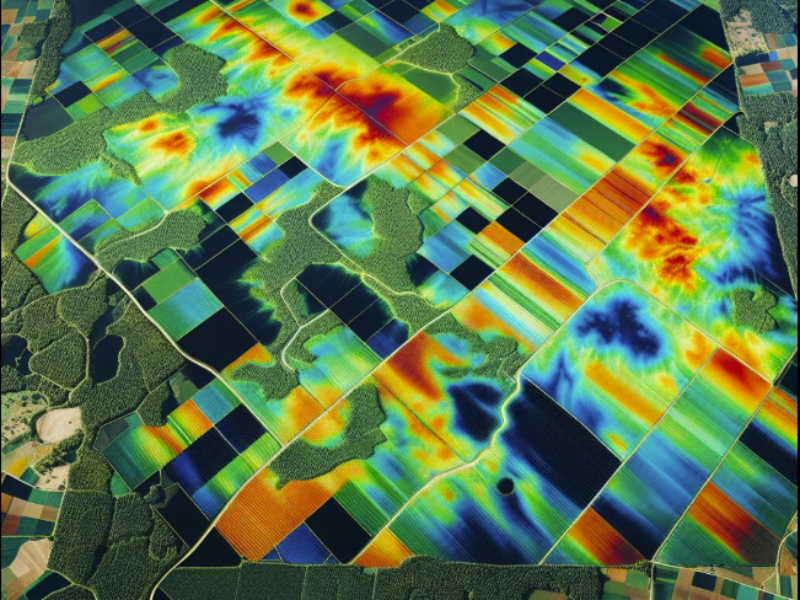
Most artificial intelligence used today is pattern-matching AI which involves looking at vast amounts of data, finding correlations, and making predictions based on those patterns. If you show it enough photos of cats, it learns to recognise cats. If you feed it enough satellite images of forest canopy, it learns to estimate biomass.
This works well when three conditions are met: you have lots of data, the data is clean and complete, and the relationship between inputs and outputs stays stable over time.
In African smallholder agriculture, none of these conditions hold.
Data is fragmented and incomplete. Satellite imagery is obscured by cloud cover. Ground-truthing is sparse. Farmer practices vary from one plot to the next. Traditional AI, trained on clean datasets from other contexts, fails when confronted with this messiness. It makes predictions but cannot tell you why it made them or how confident it should be.
Causal AI is different.
What Is Causal AI?
Causal AI does not just find correlations. It learns cause-and-effect relationships.
Correlation tells you that two things move together such as when farmers plant trees, carbon in the soil increases.
Causation tells you why. Planting trees adds organic matter to the soil. That organic matter decomposes into stable carbon compounds. Those compounds resist breakdown and remain in the soil for decades. That is why carbon increases.
Understanding “why” matters for carbon verification. Verifiers do not just want to know that carbon is present. They want to know that farmer practices caused the increase. They want to rule out other explanations such as changes in rainfall, differences in soil type, or natural variability.
Causal AI is designed to answer these questions.
How Causal AI Works for Carbon MRV
GreenScope's causal AI platform operates in three steps.
• Step 1: Build a causal model. The platform encodes what scientists already know about how carbon behaves in agricultural systems. Trees add biomass to soil. Rainfall increases decomposition rates. Soil type affects how much carbon can be stored. This domain knowledge is built into the model structure, not learned from scratch.
• Step 2: Learn from available data. The platform ingests satellite imagery, weather data, soil maps, and farmer records, even when these datasets are incomplete or noisy. It uses the causal model to fill gaps intelligently, drawing on relationships encoded in the model rather than guessing randomly.
• Step 3: Answer counterfactual questions. What would carbon levels be if this farmer had not planted trees? What would they be if rainfall had been lower? Causal AI can simulate these alternative scenarios, providing the counterfactual evidence that verifiers require to confirm additionality – the proof that carbon storage would not have happened without farmer action.
Why Causal AI Matters for Data-Scarce Environments
Traditional MRV approaches, whether ground-based or satellite-only, struggle in African smallholder systems because they assume complete data. Causal AI does not make that assumption.
Cloud cover creates data gaps. Traditional AI interpolates or discards the pixel. Causal AI uses causal relationships to estimate missing values intelligently.
No ground-truth data is available. Traditional AI fails or produces high uncertainty. Causal AI transfers knowledge from similar contexts where data does exist.
Heterogeneous farm plots are averaged. Traditional AI averages across pixels, losing accuracy. Causal AI models plot-level variation using causal structure.
Additionality must be proven. Traditional AI cannot answer counterfactual questions. Causal AI explicitly models what would have happened without the farmer's intervention.
From Correlation to Causation
The shift from correlation to causation is not incremental. It is fundamental.
Correlation tells you what happened. Causation tells you why.
For carbon markets, “why” is what verifiers pay for. They do not pay for carbon that would have been there anyway. They pay for additional carbon that farmer practices caused.
Causal AI provides the evidence chain that connects farmer action to carbon outcome. It makes the link explicit, testable, and auditable.
What This Means for Carbon Developers
For carbon developers operating in Kenya and across Africa, causal AI offers three practical advantages.
• Faster deployment. Because causal AI does not require complete historical data, the platform can generate initial carbon intelligence outputs within three months of county onboarding – not two to three years.
• Lower cost. No expensive ground sensor networks required. Strategic ground-truthing at representative sample points (5-10% of plots) is sufficient to calibrate the causal model.
• Audit-ready evidence. The causal model structure provides the counterfactual logic that verifiers demand. Methodology documentation is designed for third-party review under Bio-Carbon Standard.
April 20, 2026 4 min read
What Is Causal AI and Why It Matters for Carbon Verification
Causal AI moves beyond correlation to understand why carbon is stored. Learn how this technology enables MRV in data-scarce environments where traditional models fail.
P
Peter Gichane
PhD Researcher
Explore More Publications
Discover more insights on climate analytics and sustainability.
View All Publications